
This is part of Poor Man’s Community Spotlight — a series where we sit down with the people who make the Treasure Valley what it is. Not polished bios. Not press releases. Just real people telling real stories, their way. If you’d like to be featured, fill out our storyteller’s questionnaire [QUESTIONNAIRE LINK] — it takes as long as you want it to.
Before All This
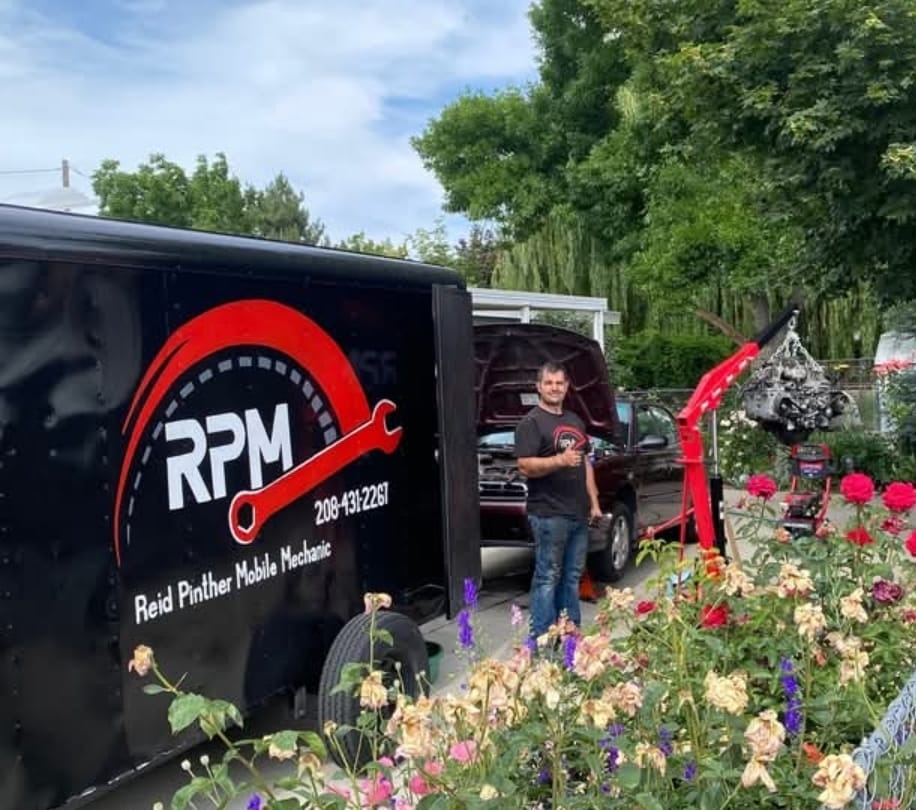
Reid Pinther didn’t start out turning wrenches in people’s driveways. He came up working construction jobs out in the Rupert, Burley, and Twin Falls areas — the kind of work where you show up early, get dirty, and hope the check clears. Then came Les Schwab, and from there he found his way into wake surfing boats. Malibus. Axis. Tigés. MasterCrafts. Supras. He got certified through a few different schools, learned the ins and outs of marine mechanics, and was getting good at it.
Then the company he was working for decided to go a different direction. Let him go. And that would’ve been fine if it only happened once — but this became a pattern. After the third time, standing in Les Schwab’s Pocatello store 115, Reid looked around and had the kind of thought that changes everything: a job for the rest of my life is not in the cards.
So he talked it over with his wife. They made a decision together: start a mobile mechanic business. Come to people. Fix their vehicles for a fair price. And hope that honesty and transparency would turn out to be a good business model.
Turns out, it is.
The Crossing
Every business owner has a moment where they almost walk away. Reid’s happened recently.
A customer was unhappy about something, and it cost Reid nearly half his monthly income. That’s not a bad Yelp review — that’s a gut punch. The kind that makes you open Indeed at midnight and think about punching a clock again. Because here’s the thing about a regular job: you don’t have to deal with customers. Someone else handles that. You just do the work, collect the check, go home.
But Reid sat with it. And what he came to was this: people who are hurt, or hurting, are the ones that end up hurting people. That gave him a lot to think about. He’s got way more great customers than bad ones. And he knows it’ll stay that way. The bad ones? He’ll lawyer up if he has to.
He kept going.
The Ones Who Walk Through the Door
When you ask Reid who changed how he sees what he does, he doesn’t talk about a big contract or a five-star review. He talks about the single mom with kids who relies on one vehicle. The family that’s just trying to keep up with the economy. When he can fix their car for a fraction of what a dealership would charge — and then tell them, “just get me paid, when you can” — that’s the work.
He doesn’t need a manager looking over his shoulder to make sure he does the job right. He just fixes the issue. The customer gets to see it happen in real time. No three or four week wait times. No runaround. Just a guy, a trailer, and the right tools showing up where you need him.
The Fire That Keeps You Warm
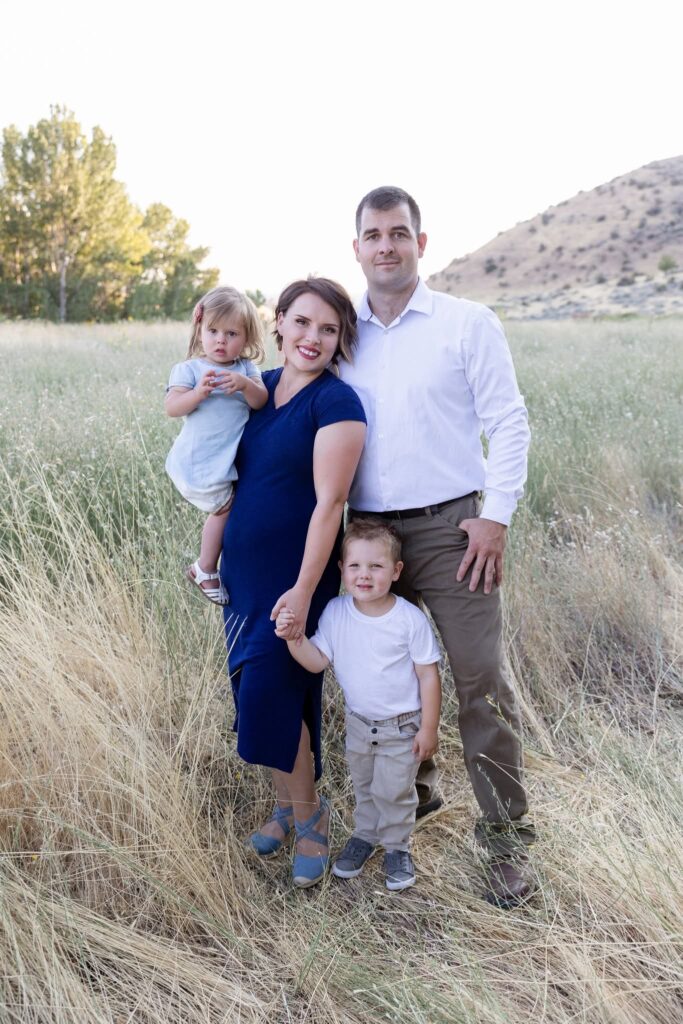
Ask Reid what he protects — what he won’t compromise on, even when it costs him — and the answer is immediate: his family. He’d lose every customer before he’d lose time with his wife and kids. There’s not a single customer more important than them.
And when you ask what fills him back up when he’s poured out everything he has? A good longboard session. Snowboarding on the mountain. Riding bikes. Going for a walk. Mainly just being outside. And sometimes — because the man is who he is — it’s fixing his own vehicles.
What People Don’t Know
Here’s the thing that might surprise you about Reid: he just cares about fixing the car. Not much else. No grand marketing scheme. No empire-building vision board. Just the work.
And here’s what found him that he wasn’t looking for: compliments. People started telling him he was doing good work, and he didn’t know what to do with that. He’d never had it at a regular job — never knew if what he was doing was good or not. Learning how to actually receive a compliment, to internalize it? He says that’s still difficult.
The question he’s waited years for someone to ask? Questions of learning — instead of questions of doubt or probing for fault. That one sits with you.
Why Boise
Simple enough, Reid says. More people, more problems, more opportunities. Bigger success rate. He’s not a guy who over-explains things.
But when you ask what he sees in this community that others miss, something shifts. He sees what a lot of people see, he says. But he tries to remind himself that people in the city are hurting — whether inside or outside. And people just want to be heard. They want someone to tell them that what good they’re doing, is good.
The Giving
Reid can’t remember the first time he gave something away. He remembers that he has, but not the details. It was probably helping someone diagnose something for free, or making sure a broken-down car got to where it needed to go on Christmas Day. Sometimes the part’s cheap enough or the job easy enough — you just get it done. Play that karma game.
When you ask him to tell you about a time he gave more than he had, he redirects it. That question should be answered by his wife, he says. Because he just works — sometimes loses track of time, stays at it until two in the morning. But he thinks it’s his family that gives more than they have.
The people he looks up to? They’re not the smooth talkers or the politically connected or the ones with corner offices. They’re the stalwart members of the community — the ones whose names come up when you ask anyone who the most respected person in town is. They help when it’s needed. They don’t complain about what hand they were dealt. They surround themselves with movers and shakers. People who get things done.
What He Lost, What He Found
Along the way, Reid lost his worry about the cost of doing business — the tools, the fuel, the food, the rent. He says that hesitantly, because he’s noticed that once some people decide they’re good at something, they jack their prices up. That’s not him. He just stopped letting those costs eat at him.
And what he’d want people to remember if it all ended tomorrow? Reid went somewhere most people don’t go in a questionnaire like this:
Feed the good wolf. Be believing, be hopeful, have charity, but be blind. Know the difference between good and evil. Know how the spirit speaks and follow him. Keep fighting, always be aggressively patient. Dream Big, and help others dream Big.
The last thing he wrote, before signing off: “Thanks for letting me work on your vehicles, for giving me a chance.”
That’s Reid.
Find Reid
Reid Pinther Mobile Mechanic Services — Boise, Idaho
Services: Engine diagnostics & repair, electrical, suspension, brakes, tune-ups, oil changes, and more
Rates: $50 diagnosis, $100/hour (engine & electrical), $100–$150/axle (brakes & suspension)
Phone: 208-431-2267
Facebook: https://www.facebook.com/share/1FZnWXokxP/
Instagram: https://www.instagram.com/rpm_mechanic_services

About This Series
Poor Man’s Community Spotlight is about the people who make the Treasure Valley worth living in. Not the loudest voices — the realest ones. If you know someone whose story deserves to be told, or if it’s yours, fill out our storyteller’s questionnaire [QUESTIONNAIRE LINK]. Take as long as you want. Nothing gets published without your approval.
Previously in the series: Community Spotlight #1: Joe Turmes — The Engineer Who Became Idaho’s Loudest Conscience [JOE SPOTLIGHT LINK]
Brian Hoyt is the founder of Poor Man Window Cleaning — Boise’s friendly neighborhood grime fighter, leaving ’em wet since 2002. When he’s not cleaning windows, he’s cooking soup for a hundred people or finding ways to lift up the folks who make this valley home.
Pingback: The Brave Art of Showing Up: The Mike Hanselman Story - Boise Window Cleaner | Poor Man Window Cleaning