
This is the first installment of Poor Man’s Community Spotlight — a series where we sit down with the people who make the Treasure Valley what it is. Not polished bios. Not press releases. Just real people telling real stories, their way. If you’d like to be featured, fill out our storyteller’s questionnaire — it takes as long as you want it to.
Before All This
Joe Turmes is an engineer. He’s a husband to a veteran. He’s a father — to a trans kid and a disabled kid. Before any of this started, his world was work and family, with art filling in the cracks. Photography. Playing in a band. The kind of life where your focus is on the people right in front of you.
He was, and still is, a Nampa guy. Born in Rock Springs, Wyoming, moved to Idaho as a kid, graduated from Caldwell High School. Grew up poor — but in the kind of poor neighborhoods where people actually knew each other. Where community wasn’t a buzzword, it was just how things worked.
At work, Joe climbed the ranks. Got exposed to the upper class. Found their culture, in his words, “appallingly boring, not to mention out of touch.” Even as his career advanced, his home stayed where it always was — in his old house in Nampa, and in the dive bars where his friends play music.
When Everything Tilted
It wasn’t one moment. It was a pile-up.
Joe watched the veteran’s care for his wife get degraded. Watched his son lose Medicaid. Watched his trans son lose their scholarships. All within a few weeks. Meanwhile, friends were losing jobs. He was on the verge of losing his. DOGE was cutting everything in sight. He went from being well on his way to not being sure if he or his son would keep their house.
That’s not a single moment. That’s the ground shifting under your feet.
Who He Had to Become

Joe has always been a leader, an artist, and a helper. He and his wife Clover took pride in being the people anyone could count on. He fixed stuff for friends before they even asked. She made food for anyone who was sick or struggling. At work, he was a disruptor — championing underground support networks to change company culture from the inside.
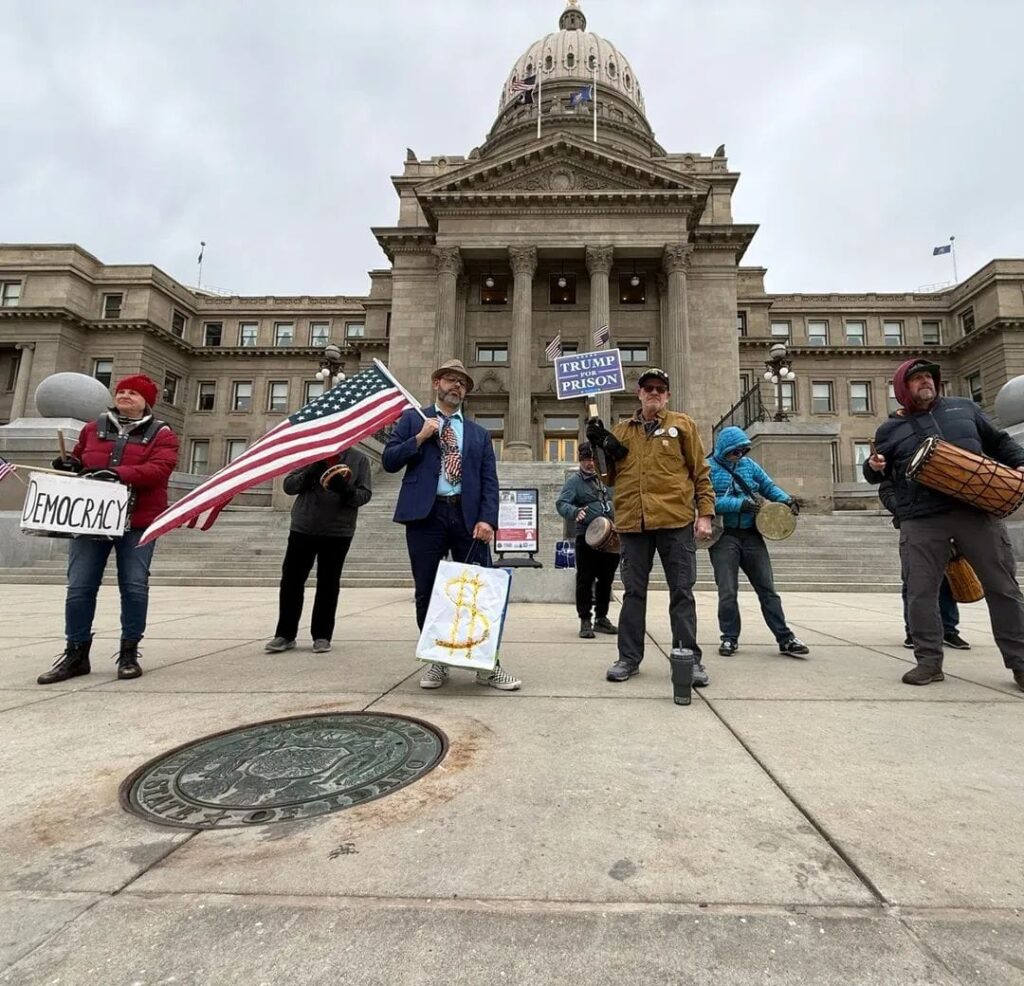
When Idaho 50501 started, Joe showed up as a spectator. Watched the organization struggle with their PA system. And because that’s who he is — the guy who sees a problem and fixes it — he jumped in to run sound.
Three months later, he saw a need for a local human face on the movement, and he jumped into that too.
Now, a year in, Joe helps statewide candidates fix their campaigns, connects organizations to resources, and works to get more local people to run for office. His time as a musician translated directly into performing politics for the public. As he puts it: he went from proactively fixing things for friends and family to proactively fixing the country.
The 50501 movement — which stands for 50 protests, 50 states, 1 movement — has grown into one of the largest grassroots mobilizations in the country, drawing thousands to the Idaho State Capitol and millions across the nation. And Joe is one of the people making it happen right here in the Treasure Valley.
The Crossing
When asked about the moment he almost turned back — almost said “this is too much” — Joe’s answer was simple: he’s never had that moment.
For a long time, he was risk averse. And he could see how that held him back. But when he finally took the brakes off, the successes came — surprising ones that emboldened him to push harder and faster.
What he did lose, though, was his free time. Art. Travel. Exercise. Guitar. The trails he used to run to stay in shape. He even cancelled international travel over fears of being detained. The work takes everything, and unplugging has become almost impossible.
What Found Him
When Joe first stepped into leadership at Idaho 50501, he wanted to keep it separate from his personal life. He wanted everyone in the organization to maintain that separation too — to build their own support networks outside the movement.
Instead, they became a family.
People started pulling their personal networks into the organization. New friendships formed across gender, generation, political affiliation, and history. Their meetings became, in Joe’s words, “a beautiful cross-section of Idaho.” It’s obvious, he says, that they care deeply about each other.
The Place
Ask Joe what he sees in this community that others miss, and his answer cuts right through: “Even the most right-wing people are 80% the same as the rest of us.”
Outside of a handful of truly extreme people, Joe has found community in every neighborhood and town in the state. The best people he’s ever met come from wildly different backgrounds with nothing in common on paper — and everything in common where it counts.
A Face That Changed Everything
Joe had a mentor who was also a close family friend. She lived in the executive world but had firsthand experience with extreme poverty — so she never lost her soul the way so many executives do. She taught Joe to see the game for what it was: the inherent battle of egos, and how to work them to his will.
She single-handedly changed his career trajectory. Not by making him a better engineer — but by making him a smart player in the rooms where decisions get made. That skill, Joe says, translates especially well into the world of politics.
The Giving
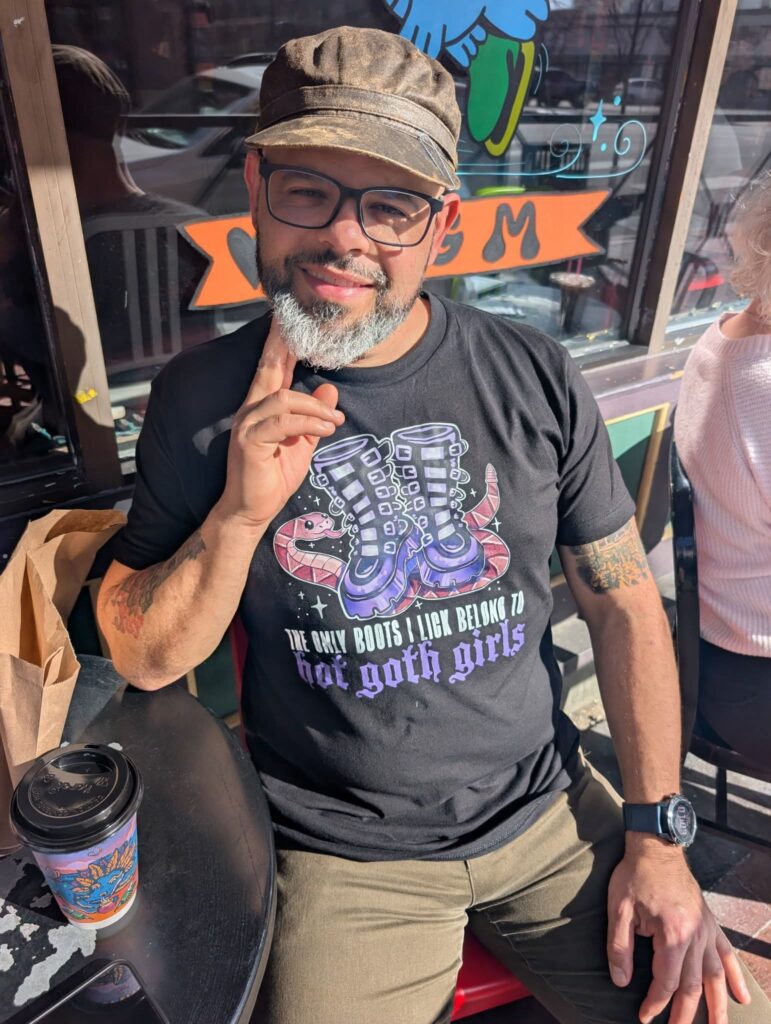
An older version of Joe was cautious, risk averse, and protective of what he had. His wife Clover changed that. She always gave freely, and taught Joe the value of it — that they didn’t really need much, and that the joy of making sure their friends and family had what they needed was immense.
When Joe was young and poor, he still had his house — a large old home in a tough part of town. He and his first wife took in a pregnant teenager, gave her a safe place to stay while she had her baby and got back on her feet. His wife at the time made sure the young woman had transportation to every appointment and was there for the birth.
Joe’s heart belongs to a lot of groups. Local food banks — his aunt runs one in a rural part of the state. Corpus Commons. PSL, which he calls “tenacious, smart, and willing to take risks.” The ACLU. He’s learned that resistance comes in many different forms, and change happens from every angle.
And the selfish part — the thing that fills him up? Joe loves knowing people. When someone has a need, he loves being able to say “I know a guy” — and knowing that guy will want to help. Watching completely separate social circles connect, support each other, and build relationships moves him deeply.
The Fire
There’s one thing Joe will never compromise on, even if it costs him friends or family: he will never again allow someone to use a slur in his presence. There were a couple of times it happened and he was too shocked to respond. He’s decided that’s over.
When the world gets heavy, what keeps him going is knowing the work is effective. He thinks about the people they’ve helped and the connections they’ve built. The bravery he sees — people willing to be strategic, willing to fight together without worrying about what happens to them personally — tells him they’re here to win.
And when he’s poured out everything he has? Time with his wife. Music. Art. Movies. Sitting back with a record and blasting doom metal straight into his brain. Getting back to nature. Those are the resets.
The Secret
What would surprise people? Joe’s family has roots in this area going back to the 1800s — even though he wasn’t born here, and didn’t even know about the Turmes family connection until around 1990.
And if all of this ended tomorrow — the movement, the work, everything — Joe wants people to remember one thing: they put it all on the line. Their freedom, their businesses, their relationships. They did not look back. They did not back down. No regrets.
In His Own Words
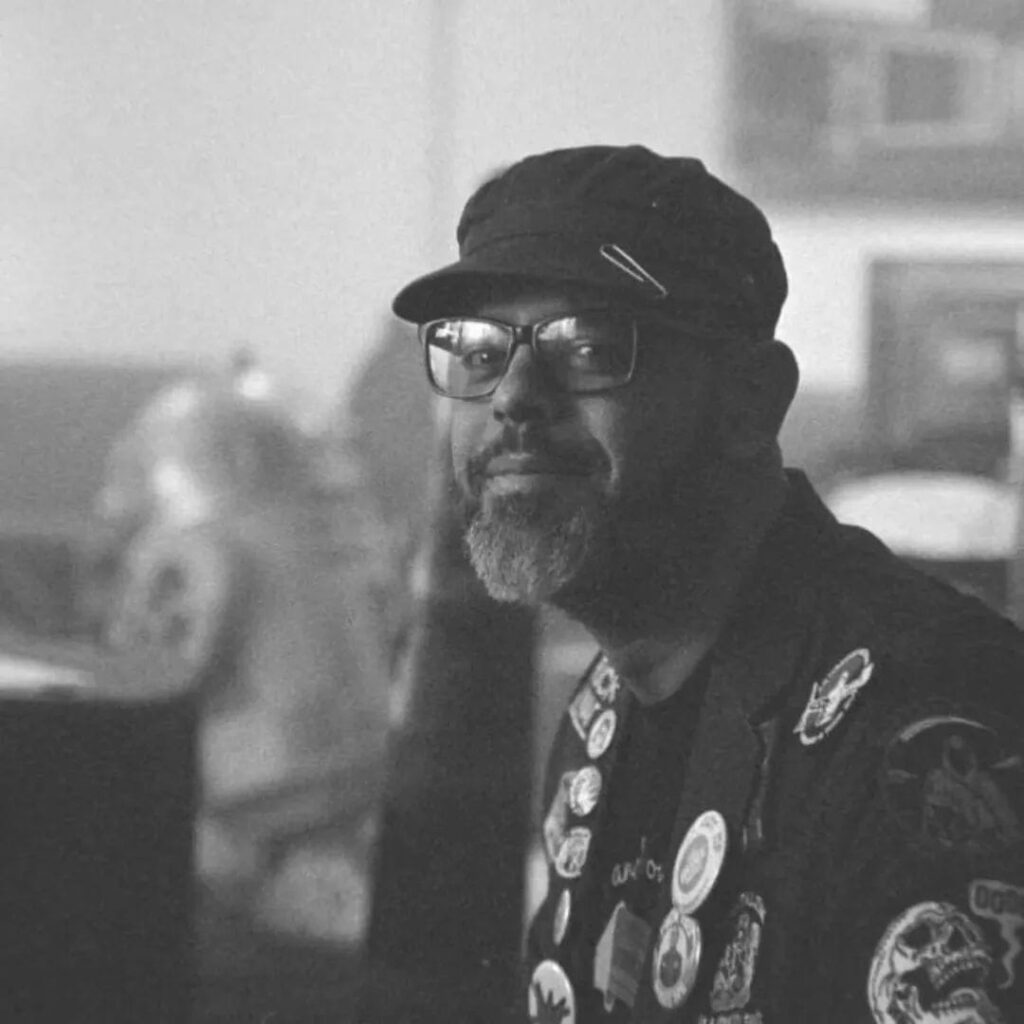
“A rant — this is not my work. This is our work. Do not look to us to save you; we can only facilitate you in doing your part. Being a public figure is like being a rock star; I put on my charisma suit to tell you a story in a way that you can best hear, because I need you to find your part to play.
And just like a rock star, when I am not on the stage, the costume comes off, and I work and plan and grind as much as I can to form the world into an acceptable shape, but I need all of you to do it with me.”
LINKS IN THE POST
INTERNAL LINKS
About Page: https://www.poormanwindowcleaning.com/about/
Blog Page: https://www.poormanwindowcleaning.com/blog/
Spotlight Form: https://www.poormanwindowcleaning.com/poor-man-community-spotlight/
EXTERNAL LINKS
KTVB Coverage: Search KTVB + “50501 Idaho Capitol rally” for most current article
Connect with Joe
📸 Instagram: @josephturmes
🎵 TikTok: @joeturmes
Learn More About Idaho 50501
🌐 Idaho 50501 Website
🇺🇸 National 50501 Movement — 50 Protests, 50 States, 1 Movement
About This Series
Poor Man’s Community Spotlight features the people who make the Treasure Valley what it is. Business owners, organizers, artists, troublemakers, helpers — anyone with a story worth telling. We don’t edit who you are. We just help you tell it.
Want to share your story? Fill out our Community Spotlight questionnaire — it takes as long as you want, and nothing gets published without your say.
Brian Hoyt is the founder of Poor Man Window Cleaning — Boise’s friendly neighborhood grime fighter, leaving ’em wet since 2002. When he’s not cleaning windows, he’s cooking soup for a hundred people or finding ways to lift up the folks who make this valley home.
Pingback: Community Spotlight: Reid Pinther — The Mechanic Who Comes to You - Boise Window Cleaner | Poor Man Window Cleaning
Pingback: Community Spotlight: Heather Jacobson — Where the Weirdos Belong - Boise Window Cleaner | Poor Man Window Cleaning
Pingback: The Brave Art of Showing Up: The Mike Hanselman Story - Boise Window Cleaner | Poor Man Window Cleaning